Remote learning offered UESS the opportunity to innovate services and student engagement experiences for our students.
Student Access and Support:
During remote learning, advising offices in UESS digitized degree and career planning forms and ensured student access to advising through remote advising options and expanded modalities for communication (e.g., chat).
The Center for Undergraduate Research and Engagement (CURE), and Office of Distinguished Scholarship (ODS) coordinated virtual drop-in and by-appointment advising hours, with 10 slots weekly, in collaboration with Affiliated Students for Undergraduate Research and Engagement (ASURE) peer leaders, Global Education Office, Undergraduate Research Opportunities Program (UROP), and McNair Scholars Program.
The Accessibility Education Center (AEC) met accessibility and accommodation needs through a variety of technological solutions, including autogenerated Zoom captioning and identifying captioning solutions during a national shortage of providers, providing instructions for modifying Canvas test parameters, and advocating for consistency in test proctoring processes.
In-Person Access:



Student Engagement:
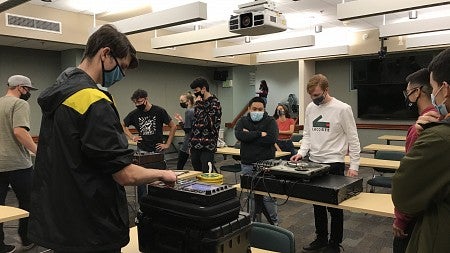
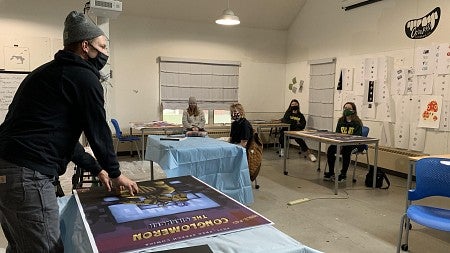
First-Year Interest Groups (FIGs) continued to offer unique in-class and outside of the classroom experiences for students enrolled in the program. Students participated in online game nights with their faculty, explored the Eugene Community together, worked in the Urban Farm, made art, and participated in workshops with artists and musicians from around the nation.
SAIL served pre-colleges students by organizing college student panels which were zoomed into classrooms across the state.